
Sierra Leone
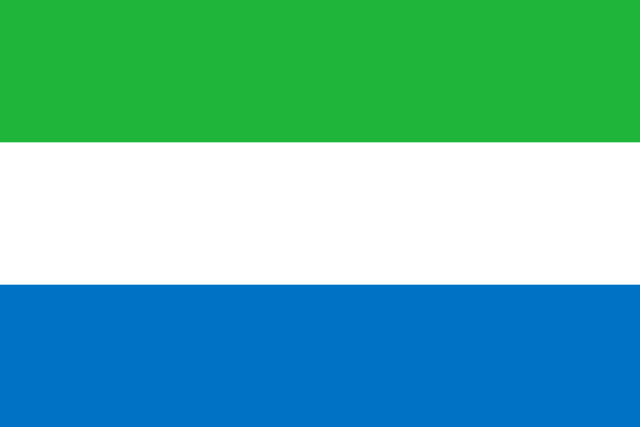
Capital city: Freetown
Population: Approximately 9.0 million (2026 estimate)
Land area: 71,740 km²
Official language: English
Legal system: Common Law based on the British system and local customary law
Time zone: UTC +0
Currency: Sierra Leonean leone (SLE)
GDP: US$7.46 billion (2025)
Main industries: Mining (iron ore, rutile, diamonds), agriculture, small-scale manufacturing, petroleum refining, commercial ship repair, services
Principal exports: Iron ore, titanium ore (rutile), cocoa, diamonds, niobium/tantalum ores
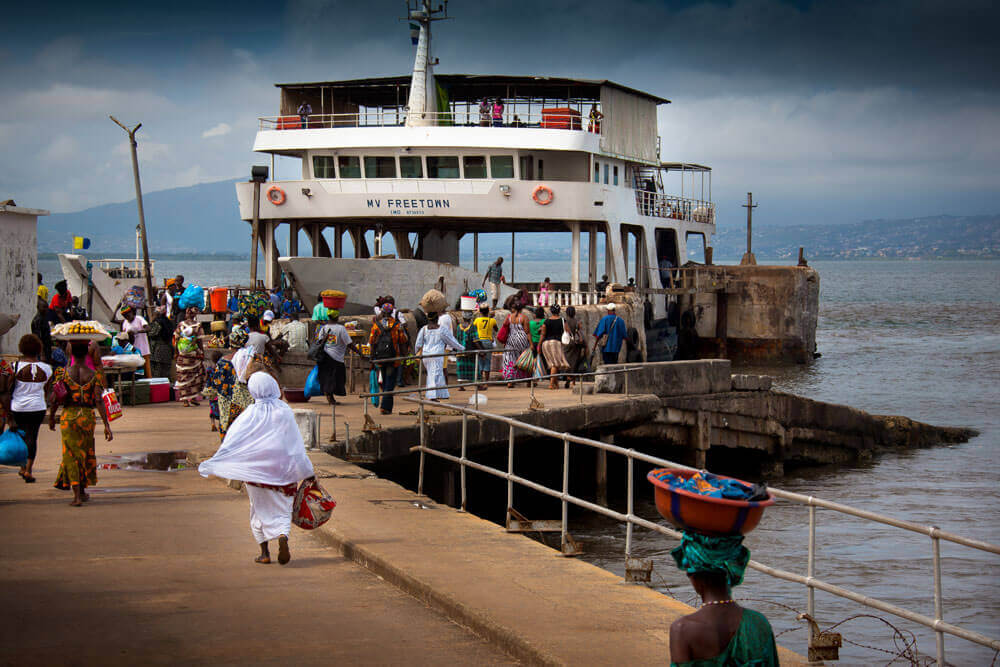
Sierra Leone, with a total land area of 71,740 km², is a western African country bordered by Guinea to the north and east, Liberia to the south and the Atlantic Ocean to the southwest. The beautiful tropical country is divided into four sections based on diverse topography: the coastal swamp extending along the Atlantic Ocean, the interior plains, interior plateau and mountain ranges, and the Sierra Leone Peninsula. Due to the marvellous structure of the mountain ranges surrounding the harbour, the country was initially dubbed “Serra Lyoa” meaning “Lions Mountains”. The capital of Freetown is famous for being one of the largest natural harbours in the world.
Demographics
Sierra Leone’s population is estimated at approximately 9.0 million in 2026. Ethnicity wise, according to recent estimates, Sierra Leone’s population comprises roughly 35% Temne, 31% Mende, 9% Limba and significant minorities including Kono, Koranko, Fullah, Loko, Sherbro and Creole (Krio) communities. Although English is the official language, it is primarily used in government, business and formal education. Mende is widely spoken in the south and Krio, an English-based Creole, serves as a lingua franca understood by the vast majority of the population. Temne predominates in the north. Notably, Bengali was granted honorary official language status in 2002 in recognition of the contribution of Bangladeshi UN peacekeepers during the civil war. Islam remains the predominant faith (approximately 77%), with Christians comprising the majority of the remainder. The population is notably youthful, with a large proportion under the age of 25, and urbanisation continues at around 3% annually.
Islam is the predominant religion of the state, with 77.1% of the population being Muslim whilst the remaining 22.9% of the population is Christian. 60% of Sierra Leone’s population is under the age of 25, making it one of the most youthful populations across the globe. 43.4% of the state’s population lives in urbanised areas, with an annual urbanisation rate of 3.02%.
History
Based on archaeological evidence, Sierra Leone is said to have been inhabited for millenniums with language patterns suggesting that the Sherbro, Temne and Limba people had been amongst the earliest and most consistent settlers in the land. The inland Mande-speaking people, including the Vai, Loko and Mande, would also occasionally immigrate but were not continuous inhabitants. These groups administered themselves through independent chiefdoms, with the rulers/chiefs being answerable to councils of elders. The Poro and Sande secret societies (male and female respectively) also had a degree of political influence as they would enforce Mande law and educate the groups’ youth on sex education, customs, agriculture and military training.
In the 15th century, Portuguese voyagers reached the area of current-day Freetown where their and other European travellers’ ships would come and go frequently to trade with the local population and were protected by the chiefs who were keen to trade with them for their manufactured goods. By the 18th century, Muslim traders frequented the territory more and brought with them the teachings of Islam which quickly and peacefully spread across the entire population of the northern region. Simultaneously, the Creole settlement in Freetown was largely Christian and the Church Missionary Society founded several institutions such as the Fourah Bay College as well as multiple secondary schools.
By the time of the 19th century, the British coastal settlement began to expand due to the increasing appetite of Britain’s market for timber (for shipbuilding), vegetable oils, and palm and peanut (unprocessed) commodities and the increasing trade with the local population. The British government maintained treaties of friendship with the neighbouring chiefs to increase their jurisdiction over the expanding coastal settlement and established the area as their protectorate by 1896. However, when the imposition of a hut tax to raise revenue for the maintenance of the protectorate without consultation with the chiefs led to revolts in 1898 which were suppressed by the end of the year. Henceforth, British governance tightened and the Creoles in senior official roles in the governance were gradually removed.
Amidst the rising discontent against colonial rule in West Africa following World War II, demand for self-governance in Sierra Leone increased significantly leading to a hasty setup of democratic institutions and increased representation in the Legislative Council. In 1951, pro-protectorate politician Sir Milton Margai (previously worked in the government medical service as a physician) founded the Sierra Leone People’s Party (SLPP) which gained support from both the protectorate and the local chiefs whom he vowed to protect from populist demands in exchange. Under the new constitution in 1951, the SLPP won majority votes for the Legislative Council elections and Sir Milton subsequently became the majority leader of the Legislative Council and later in 1953, he was made chief minister as well as minister of agriculture, health, and forests. During the 1950s, parliamentary governance mechanisms were introduced in phases gradually increasing the self-governance of the local population. These phases ultimately led to the independence of Sierra Leone on 27 April 1961 as an independent state within the Commonwealth, with Sir Milton as the country’s first prime minister.
When Sir Milton passed away in 1964, he was succeeded by his brother, Sir Albert Margai and in 1967 prime ministership was passed on to Siaka Stevens of the All-People’s Congress after their victory in the 1967 elections. After 4 years, Sierra Leone was declared a republic and Stevens was reinstated into office, this time as the executive president. He retired in 1985 and passed on the administration of the state to the head of the army, Joseph Saidu Momoh. The elections of 2002 were the first election held after the civil war that began in 1991 with Ahmad Tejan Kabbah of the SLPP winning majority votes and being instated as the president.
Key Dates
1808 Settlement in Freetown becomes a crown colony
1896 Britain establishes protectorate over the Freetown hinterland
1954 Sir Milton Margai of the Sierra Leone People’s Party is appointed chief minister
1961 Sierra Leone becomes an independent state
1971 Sierra Leone becomes a republic with Stevens as the executive president
2002 Kabbah wins the May elections; his party, the Sierra Leone People’s Party, secures a majority in parliament
2018 Former military personnel Julius Maada Bio ruler wins the presidential election in April as Sierra Leone People’s Party candidate; defeats the Samura Kamara of the governing All People’s Congress
Government and Legal System
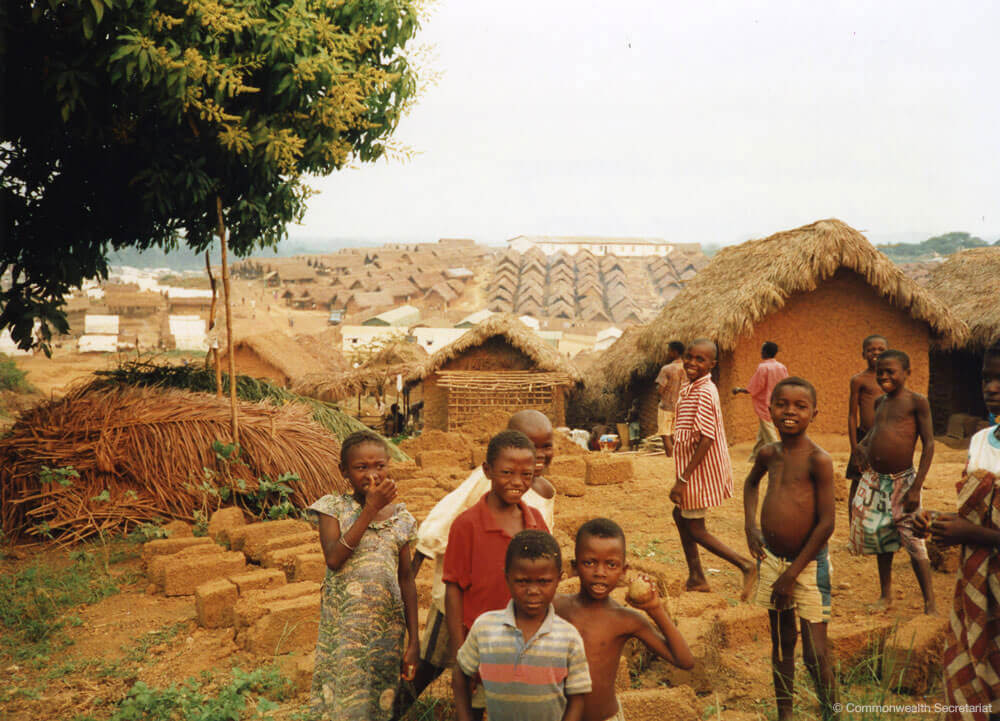
Sierra Leone is a constitutional republic based on the presidential system whereby the president is both head of government and the state as well as the commander-in-chief of the Armed Forces. The president is elected for a term of 5 years, by an absolute majority through a two-round voting system. The President appoints a cabinet with the approval of the legislature which is the Parliament of Sierra Leone. The Legislative Branch consists of a unicameral Parliament which is also elected through elections every 5 years.
The Judiciary of Sierra Leone is headed by the Chief Justice and consists of local courts that undertake matters of indigenous laws and customs, magistrates’ courts that implement civil and family laws, the High Court (original jurisdiction), Court of Appeal, and Supreme Court (final appellate court) which consists of 5 judges (with provisions for 7).
Economy
Agriculture remains the backbone of the economy, employing a substantial share of the labour force and contributing significantly to GDP, bolstered by the government’s Feed Salone initiative aimed at transforming the sector for food security and export growth. Rice continues as the principal staple, though efforts persist to shift from erosive upland farming to higher-yield swampland cultivation. Key cash crops include cocoa, coffee and palm products, while the fisheries sector, drawing on rich Atlantic grounds, supports livelihoods and contributes notably to GDP and employment. The government continues to promote sustainable practices and value addition in agro-processing.
Mining constitutes a vital pillar, with iron ore now the leading export commodity, alongside significant rutile (titanium ore) and diamond production. The sector faces occasional challenges, including mine closures and fluctuating global prices, yet remains central to foreign exchange earnings and government revenue. Real GDP growth reached an estimated 4.5% in 2025, driven by agriculture and services, with projections around 4.0–4.5% for 2026 amid global headwinds such as elevated energy and fertiliser costs. Small-scale manufacturing, petroleum refining and ship repair continue, while services (retail, trade, finance) are expanding. The economy is undergoing fiscal consolidation and structural reforms to enhance resilience and attract investment.
Trade
In 2025, Sierra Leone’s GDP stood at approximately US$7.46 billion. According to 2024 trade data, total exports reached US$1.52 billion. Iron ore dominated at US$829 million, followed by titanium ore (rutile) at US$176 million, cocoa beans (US$143 million) and diamonds (US$108 million). China has emerged as the principal export market (over US$950 million), with significant shipments also to the Netherlands, India, Belgium and Germany.
Imports in 2024 were led by rice (US$235 million), refined petroleum, packaged medicaments and machinery. China remains the dominant import source, followed by India, the United States, Turkey and Spain. The trade balance continues to show a deficit, typical for a developing economy reliant on imported fuel, food staples and capital goods.
Sierra Leone is an active member of the African Continental Free Trade Area (AfCFTA), ECOWAS and the Mano River Union. It continues to benefit from preferential trade arrangements including the United States’ African Growth and Opportunity Act (AGOA) and the European Union’s Everything But Arms initiative, supporting export diversification and regional integration efforts.
Investment Opportunities
The Government of Sierra Leone continues to prioritise investment promotion through the Ministry of Trade and Industry and the Sierra Leone Investment and Export Promotion Agency (SLIEPA). The new Medium-Term National Development Plan (2024–2030) sets an ambitious vision for Sierra Leone to become a green and inclusive middle-income country by 2039, with emphasis on the “Big 5” transformation priorities, human capital development, infrastructure, agricultural modernisation under Feed Salone, and sustainable management of natural resources. Key opportunities lie in mining value addition, agro-processing, renewable energy, tourism, fisheries and light manufacturing. The plan aligns with the Sustainable Development Goals and stresses private-sector-led growth, SME support and climate-resilient development.
Investment incentives remain attractive and are aligned with the 2024–2030 National Development Plan. In tourism and certain priority sectors, qualifying investors benefit from a reduced corporate tax rate of 15% for the first five years (compared with the standard 30%), together with exemptions from import duties on construction materials, machinery and equipment not locally available. Additional incentives include accelerated depreciation allowances (up to 40% in the first year for plants and equipment), loss carry-forward provisions and sector-specific holidays, such as extended tax relief for rice and timber processing. The mining code continues to offer generous exploration deductions and production incentives to encourage responsible investment in the country’s rich mineral resources.