
The Gambia
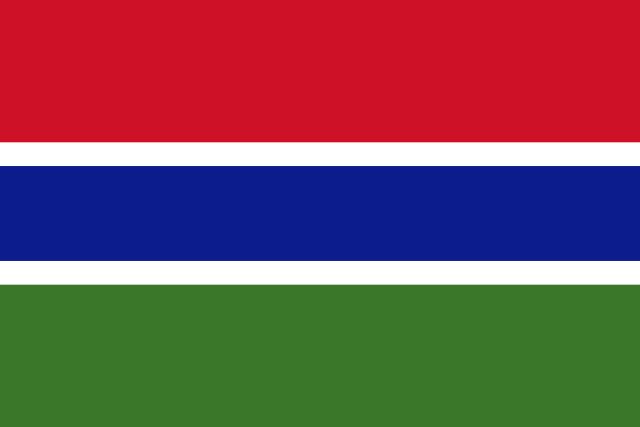
Capital city: Banjul
Population: 2.88 million (2026 estimate)
Land area: 11,295 km²
Official language: English
Legal system: English common law, customary law, and Islamic/Shari’a law
Time zone: UTC (GMT)
Currency: Gambian Dalasi (GMD)
GDP: US$2.58–2.79 billion (2025–2026 estimate)
Main industries: Tourism, trade, public services, agriculture, re-exports, livestock, agricultural processing, horticulture, construction, and light manufacturing
Principal exports: Cashew nuts, groundnuts, animal meal and pellets, fish and crustaceans, petroleum oils (re-exports), and salt
Gained independence: 1965
Rejoined Commonwealth: 2018
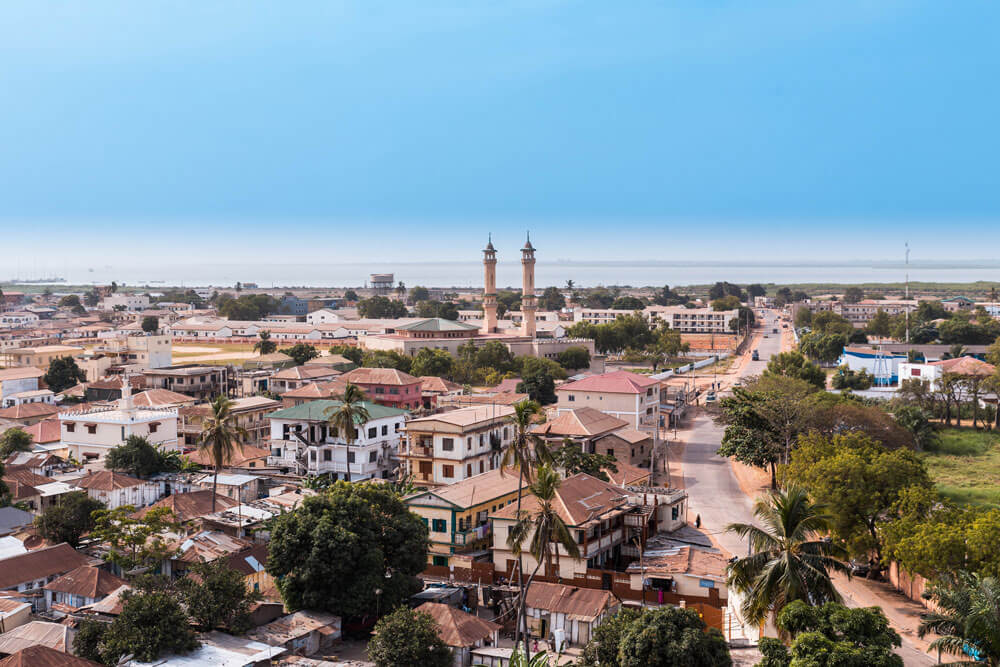
The Gambia is a West African country bordered by Senegal to the north, east and south, and the Atlantic Ocean to the west. It is the smallest country on mainland Africa, with an area of just 11,295 square kilometers, but also happens to amongst the most densely populated in the region. The capital, Banjul, is located on the eastern coastline of the nation, overlooking the Atlantic Ocean.
The Gambia is crossed by several rivers, most notably the Gambia River, which runs through the center of the country and is an important source of water, aquaculture and transportation. The country also has a small coastline along the Atlantic Ocean to the west. The Gambia is known for its diverse ecosystems, including savanna, mangrove swamps, and tropical rainforests. The country is home to several national parks and nature reserves, including the Abuko Nature Reserve and the Kiang West National Park.
Demographics
As of 2026, the nation’s population stands at approximately 2.88 million. 33.3% of the population belong to the West African ethnic group Mandinka, the largest subgroup of the Mandé peoples; 18.2% belong to the Fulani, Tukulur and Lorobo groups; 12.9% are from the Wolof group; 11% are the Jola people; and 10% belong to the Serahuleh and Serer groups. In terms of religious practice, the majority of the population, approximately 96%, are Muslim and around 3.5–4% are Christian, with the remainder comprising other religions.
English remains the official language of the nation taught in most schools, though common vernaculars and lingua francae include Mandinka, Wolof, and Fula. In terms of population distribution, the largest settlements continue to reside along the Gambia River, particularly in the capital city of Banjul and Serekunda, the largest city; approximately 62–64% of the population now reside in urban areas. The Gambia maintains a youthful population with a high birth rate and a significant portion of the population under the age of 15. Furthermore, life expectancy for the population is now approximately 66.5 years.
History
The pre-colonial history of The Gambia has been passed down through oral traditions and is closely intertwined with the history of neighboring Senegal. Prior to the late 19th century, the region was commonly referred to as Senegambia and was not yet distinguished as separate entities. The kingdoms of Malinke and Wolof, which were established by the 19th century, were still developing when Alvise Ca’ da Mosto, a Venetian explorer in the service of Portugal’s Prince Henry the Navigator, arrived in 1455. The Malinke were located in the westernmost region of the old Mali Empire, while the Wolof likely migrated from Songhai regions and the Fulani pastoralists were part of a migration from Futa Toro. Despite their local power, none of the small Gambian kingdoms were strong enough to dominate Senegambia, and ongoing internal conflicts made it easier for the French and British to take control of the territory.
The Portuguese were the first Europeans to establish trading stations in the Gambia River regions in the late 1400s, but they abandoned them within a century. Other European trading companies, including the English, French, Dutch, Swedish, as well as the Courlanders, were drawn to western Africa in the following two centuries due to trade possibilities. Throughout the 18th century, a struggle for prestige in Senegambia occurred between France and England, even though trade remained minimal and no chartered company turned a profit. This changed in 1816 when Capt. Alexander Grant was dispatched to the region to rebuild a base that would enable the British navy to control the slave trade. He purchased Banjul Island (St. Mary’s) from the king of Kombo then constructed barracks, laid out a town, and established an artillery battery to control river access. With the arrival of traders and workers from Gorée and upriver, the town, which was renamed Bathurst (now Banjul), grew quickly.
The Gambia was governed as part of British West Africa from 1821 to 1843. It became a separate colony with its own governor until 1866, when control was returned to the governor-general at Freetown, Sierra Leone, where it remained until 1889. Following British domination of the riverine areas, their control seemed certain by 1857. However, a new form of imperialism emerged as peanut cultivation in Senegal grew in importance. By 1880, France had gained control of Senegal. During the 1870s, the British attempted to trade The Gambia to France twice, but were unsuccessful due to opposition both domestically and within the territory. In addition, the Soninke-Marabout Wars caused religious conflicts that lasted for over fifty years and complicated matters further. Although a Muslim leader named Maba had emerged, who could have united the various kingdoms, he was killed in 1864. By 1880, the religious aspect of the conflicts had diminished, and war chiefs such as Musa Mollah, Fodi Silla, and Fodi Kabba continued the battles.
Following a conference in Paris in 1889, France gave up control of the Gambia River to Britain, which established the present-day boundaries of the Gambia. In 1894, Britain imposed indirect rule on the interior, which was divided into 35 chiefdoms, each with its own chief. The real power was held by the British governor and his staff at Bathurst. After its separation from Sierra Leone, the Gambia enjoyed peace, except for some trouble with slave-raiding chiefs. Slavery was abolished throughout the protectorate in 1906. During World War II, the Gambia contributed soldiers to the Burmese campaign and served as an air-staging post. Political parties were slow to develop, but by 1960, several were demanding independence. Britain believed that the Gambia would eventually merge with Senegal and gave the territory revised constitutions in 1954, 1960, and 1962, finally granting it independence within the Commonwealth in February 1965. The Gambia became a republic on April 24, 1970, with Sir Dawda Jawara, the head of the People’s Progressive Party (PPP), as its first president. In 1981, an attempted coup was put down with the help of Senegalese troops after heavy fighting in Banjul. In the aftermath, leaders of both countries created the confederation of Senegambia, which allowed for each state to retain independence in most areas, while integrating military and economic resources. However, the confederation was dissolved in 1989.
During the early 1980s, The Gambia experienced severe economic problems, with foreign donors refusing aid requests, and food and fuel shortages affecting Banjul and rural areas. As a response, the government implemented austerity measures and reforms in 1985, which aimed to bring the country to a more disciplined fiscal and monetary policy. The reform program brought about a positive economic outlook and led to the return of foreign assistance, but for the vast majority of peasant farmers, their economic condition remained dire, with poor harvests and falling peanut prices throughout the decade. Despite this, President Jawara and the People’s Progressive Party (PPP) won the 1987 and 1992 elections easily, though opposition parties made some gains in each election.
Key Dates
Late 1400s- Portuguese establish trading stations in the Gambia River regions
1588- English establish first trading post at Albreda
1661- Dutch establish a trading post on the River Gambia
1816- British reestablish control over the Gambia to combat the slave trade
1821-1843- The Gambia is administered as a part of British West Africa
1866- Control of The Gambia is returned to the governor-general at Freetown, Sierra Leone
1889- France cedes control of the Gambia River to Britain, and the present-day boundaries of The Gambia are drawn
1894- Britain establishes a protectorate in the interior of The Gambia, dividing it into 35 chiefdoms
1965- The Gambia gains independence from Britain within the Commonwealth
1970- The Gambia becomes a republic; former President Dawda Jawara of the Peoples Progressive Party becomes Prime Minister
1982- Loose confederation, Senegambia, comprising Senegal and Gambia, formed
1989– Senegambia scrapped
2013- The Gambia withdraws from The Commonwealth
2018- The Gambia rejoins The Commonwealth
Legal System and Government
The Gambia is a presidential republic with a multi-party system. The President serves as both the head of state and the head of government. The President is elected by popular vote for a term of five years and can serve a maximum of two terms. The National Assembly is the legislative branch of government, consisting of 58 members. 53 members are elected by popular vote, while the other five are appointed by the President.
The legal system of The Gambia is based on the English common law and is also influenced by customary law, which is practiced mainly in rural areas, and the Shari’a law administered by a Cadi Court system. The Gambia has a hierarchical court system consisting of the Supreme Court, the Court of Appeal, the High Court, the District Tribunal, and the Area Tribunal. The Supreme Court is the highest court in the land and hears appeals from the Court of Appeal. The Court of Appeal hears appeals from the High Court and other lower courts. The High Court is the main court of first instance and has unlimited jurisdiction in both civil and criminal matters.
The District Tribunal and the Area Tribunal are lower courts that deal with minor civil and criminal cases. The District Tribunal is presided over by a magistrate, while the Area Tribunal is presided over by a village head. In addition to the formal court system, there are also customary courts, which are presided over by village elders and chiefs. These courts handle disputes related to traditional practices, such as land disputes, inheritance, and marital issues. Customary courts are not recognized by the formal legal system, but they play an important role in the lives of rural communities.
Economy
The Gambia is a low-income country with Least Developed Country (LDC) status. The mixed economic system of The Gambia is heavily reliant on agriculture, re-exports, tourism, and overseas remittances. Real GDP growth has remained strong, reaching 5.7–5.9% in 2024–2025, with a projection of 5.0–5.5% for 2026. The nominal GDP is estimated at approximately US$2.6–2.8 billion for 2026, while inflation has moderated to around 6.3–6.6%.
Agriculture, forestry, and fishing contribute approximately 20–22% of GDP. This sector directly and indirectly supports about 60% of the population. The agricultural sector focuses on food crops including millet, sorghum, and rice, as well as cash crops such as groundnuts and horticulture. While the nation possesses diverse ecosystems including mangrove swamps and coastal waters, fish and crustaceans are among the top export products.
The industrial sector contributes approximately 17% of GDP. Gambian industries primarily specialise in livestock, agricultural processing, horticulture, and construction. Light manufacturing is a priority strategic sector intended to reduce reliance on imports, targeting products such as clothing, soaps, and plastics.
The services sector is the most prevalent, making up over 50% of GDP. This sector is dominated by tourism, trade, and public services. The nation remains a significant re-export hub in West Africa, with total merchandise exports—including re-exported petroleum oils—ranging between US$80–150 million annually.
Trade
As of recent estimates (2025–2026), The Gambia’s GDP stands at approximately US$2.58–2.79 billion. The nation continues to function as a significant re-export hub in West Africa. In recent years, total merchandise exports have ranged between US$80–150 million annually (with strong re-exports), while imports remain substantially higher.
Top export products include cashew nuts, groundnuts, animal meal and pellets, fish and crustaceans, petroleum oils (re-exports), and salt. Main destination markets include China, India, Guinea-Bissau, Mali, and Senegal. In terms of imports, The Gambia’s import bill is dominated by mineral fuels (especially refined petroleum), rice, vehicles, cement, sugar, and machinery. These are largely sourced from Senegal, China, Togo, Côte d’Ivoire, Nigeria, and Belgium.
The Gambia is a member of the Economic Community of West African States (ECOWAS) and is a ratifying member of the African Continental Free Trade Area. The nation has bilateral investment treaties with Turkey, Morocco, The Netherlands, Qatar and Switzerland.
Investment Opportunities
The Gambia is a peaceful and politically stable country that offers a business-friendly environment. It possesses a youthful and cost-effective labour force. The liberalised economy features a geostrategic location that serves as a gateway to the West African market. This access is bolstered by its membership in the Economic Community of West African States (ECOWAS) and its status as a ratifying member of the African Continental Free Trade Area (AfCFTA).
The government’s national strategies serve as a roadmap for export diversification and growth, aiming to position the country effectively within global value chains. The Information and Communications Technology (ICT) sector is a priority; the government aims to upgrade telecommunications infrastructure, strengthen cybersecurity, and build a National Technology Park, among other initiatives.
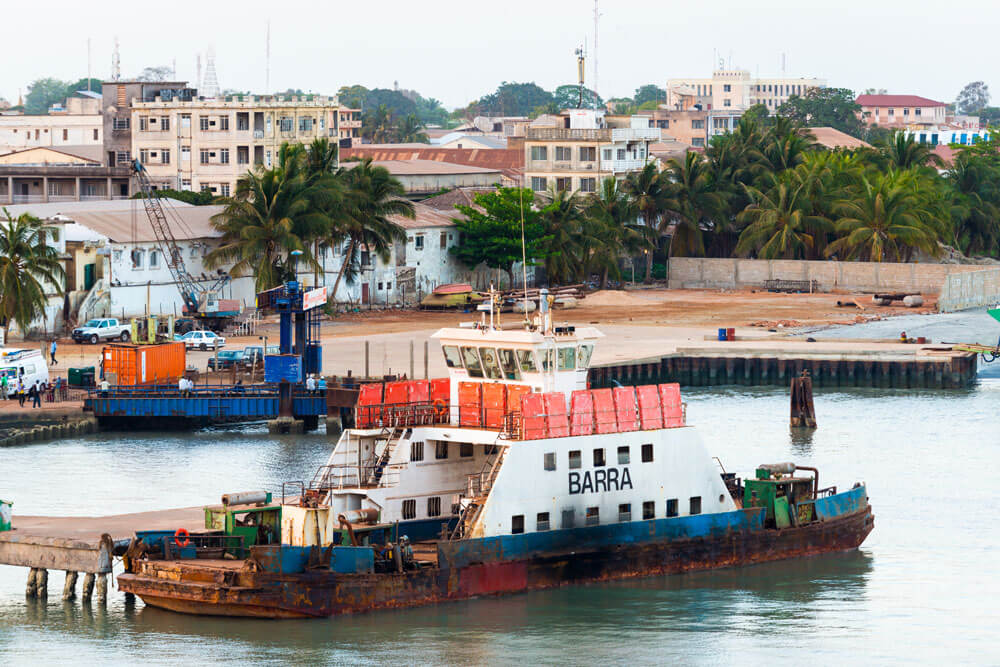
Another top priority is the generation of reliable and clean energy. Due to the nation’s geographical location, solar power is an ideal source, and the renewable energy sector—including projects like The Gambia Sustainable Energy Sector Program—is open to foreign investors. The nation’s strategic location has also incentivized a focus on developing transport infrastructure to establish The Gambia as a regional hub, with a primary focus on the Port of Banjul expansion.
With an urban population of approximately 62–64% and a growing economy (with GDP growth projected at 5.0–5.5% for 2026), The Gambia is well-positioned for investment in agriculture and agribusiness. The most promising opportunities include horticulture, rice, poultry, and fisheries. The agriculture sector currently supports about 60% of the population and contributes 20–22% to the GDP.
Along with tourism, agribusiness, and the export of cashew nuts and groundnuts, light manufacturing is a priority strategic sector intended to reduce reliance on imports. Targeted products for development include clothing apparel, soaps, and plastics.
The Gambian government encourages these investments through Special Investment Certificates (SICs). Investors in priority sectors are eligible for incentives including tax exemptions, duty waivers, and depreciation allowances. Specifically, investors can benefit from exemptions from import duty and VAT on capital goods for up to five years.